When physicians investigate persistent joint pain, they often expect to see familiar signs of arthritis, previous injuries, or age-related changes on medical imaging.
Occasionally, however, an X-ray reveals something entirely unexpected.
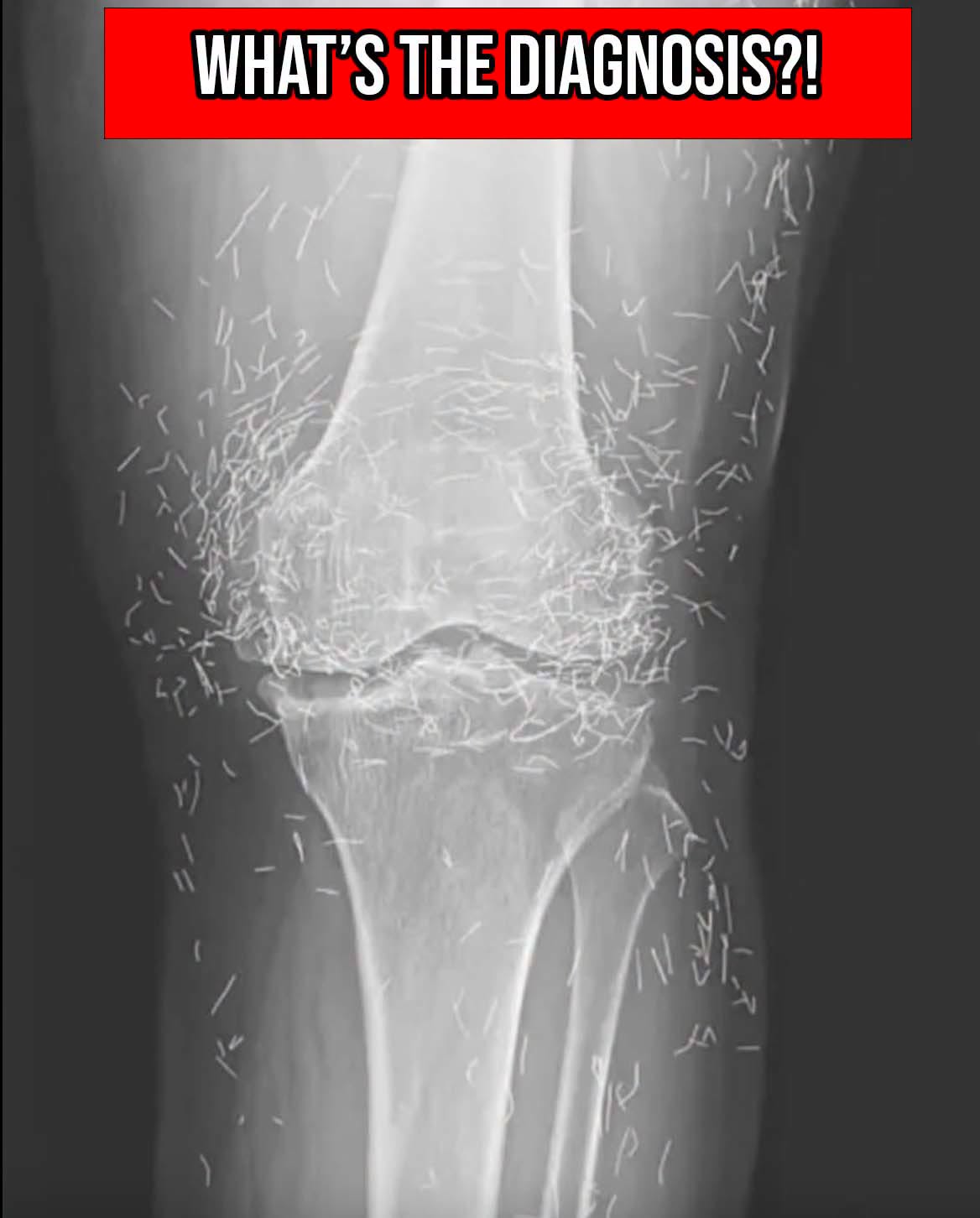
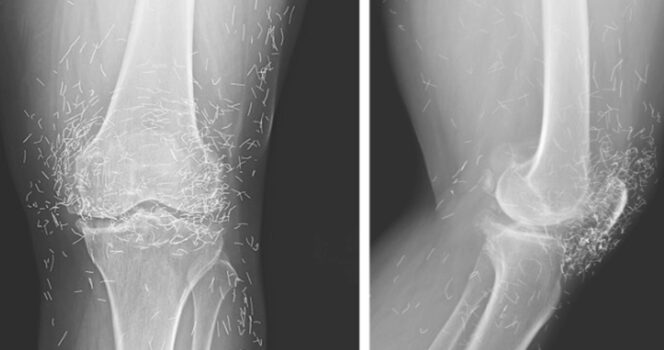
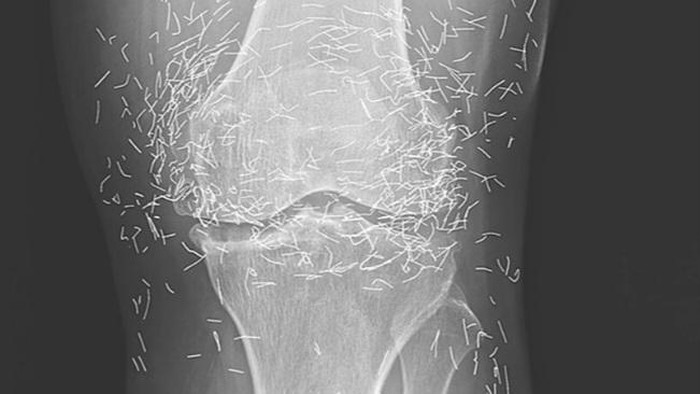
One such published medical case involved a 65-year-old woman with longstanding knee pain whose imaging showed numerous tiny metallic objects around both knees. Rather than representing an unknown medical condition, these objects were later understood to be retained gold acupuncture needles from previous treatments.
The unusual images attracted international attention not because they represented a new disease, but because they illustrated how past medical treatments can sometimes appear in surprising ways during routine examinations.
Understanding Osteoarthritis
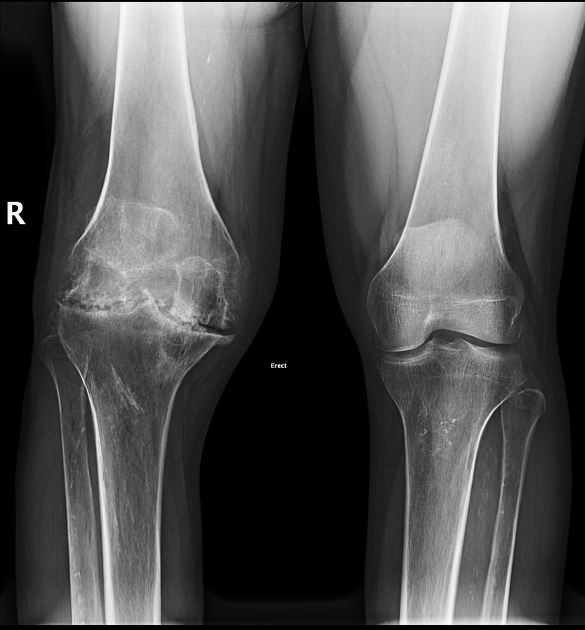
Osteoarthritis is the most common form of arthritis worldwide.
It develops gradually as the cartilage that cushions joints changes over time. As this protective tissue becomes less effective, movement may become more uncomfortable and joints may feel stiff, especially after periods of inactivity.
Common symptoms include:
Joint pain.
Morning stiffness.
Reduced flexibility.
Swelling around affected joints.
Difficulty with activities such as climbing stairs or standing from a seated position.
The knees are among the joints most frequently affected because they support much of the body’s weight throughout daily activities.
Why Some People Explore Complementary Therapies
Many individuals with chronic joint discomfort seek additional approaches alongside conventional medical care.
Complementary therapies may include:
Acupuncture.
Physical therapy.
Exercise programs.
Weight management.
Heat or cold therapy.
Mind-body techniques.
People often explore these options when symptoms continue despite standard treatments or when medications produce unwanted side effects.
Healthcare providers generally encourage discussing any complementary therapy before beginning treatment to ensure it fits safely within an overall care plan.
What Is Acupuncture?
Acupuncture is a practice that originated thousands of years ago as part of traditional Chinese medicine.
The technique involves inserting very thin sterile needles into specific points on the body.
Today, licensed practitioners use acupuncture for a variety of conditions, particularly those involving pain management.
Some researchers suggest acupuncture may influence the nervous system, stimulate the release of natural pain-modulating chemicals, or alter how pain signals are processed. However, scientists continue studying exactly how these effects occur.
The Unusual Medical Case
According to a case report published in the New England Journal of Medicine, the patient’s X-rays revealed numerous small metallic fragments surrounding both knees.
The retained pieces were believed to be gold acupuncture needles or gold thread that had been intentionally left beneath the skin during earlier treatments, a technique reported in some regions for long-term stimulation.
Although unusual, the finding demonstrated how previous procedures can remain visible on imaging years later.
Can Retained Metal Cause Problems?
Many retained medical materials remain stable without causing symptoms.
However, healthcare professionals carefully evaluate any foreign material because potential considerations may include:
Local irritation.
Inflammation.
Scar tissue formation.
Difficulty interpreting future imaging.
Compatibility with certain medical procedures.
Whether removal is necessary depends on the individual’s symptoms, the location of the material, and clinical judgment.
MRI Safety Considerations
One important issue discussed by medical experts involves magnetic resonance imaging (MRI).
Not all metal objects are unsafe during MRI examinations.
Whether imaging can proceed depends on:
The type of metal.
Its magnetic properties.
Its size.
Its location within the body.
Patients should always inform healthcare providers about previous surgeries, implants, or retained metallic objects before undergoing MRI so appropriate safety assessments can be performed.
What Does Research Say About Acupuncture?
Scientific research on acupuncture continues to grow.
Several systematic reviews suggest acupuncture may provide short-term relief for some people with chronic knee osteoarthritis when used alongside standard medical care.
However, results vary between studies, and experts generally conclude that acupuncture should complement—not replace—evidence-based medical evaluation and treatment.
Major medical organizations recommend discussing treatment options with qualified healthcare professionals to determine the most appropriate approach for each individual.
Comprehensive Management of Osteoarthritis
Current clinical guidelines often recommend combining multiple strategies.
These may include:
Regular low-impact exercise.
Strengthening muscles around affected joints.
Maintaining a healthy body weight.
Physical therapy.
Appropriate medications when indicated.
Patient education.
In some cases, surgical options for advanced disease.
Treatment plans are individualized based on symptom severity, overall health, and personal goals.
The Value of Medical Imaging
This case also highlights the importance of diagnostic imaging.
X-rays allow physicians to evaluate:
Joint alignment.
Cartilage loss indirectly through joint-space narrowing.
Bone changes.
Previous fractures.
Unexpected findings from earlier treatments.
Accurate imaging helps clinicians develop treatment plans tailored to each patient’s condition.
Conclusion
The discovery of retained gold acupuncture needles in a patient’s knees illustrates how medical imaging can sometimes reveal surprising aspects of a person’s healthcare history. While the X-ray images attracted attention because of their unusual appearance, the broader lesson is the importance of comprehensive medical evaluation and open communication between patients and healthcare providers.
For individuals living with osteoarthritis, a wide range of evidence-based treatment options is available, and complementary therapies such as acupuncture may have a role for some patients when discussed with qualified professionals. Combining scientific evidence, individualized care, and informed decision-making offers the best opportunity for managing chronic joint pain safely and effectively.
Human curiosity often begins with an unexpected image on an X-ray, but it is careful scientific investigation that transforms surprising discoveries into valuable medical knowledge.
Sources
- New England Journal of Medicine
- American Academy of Orthopaedic Surgeons
- Centers for Disease Control and Prevention – Osteoarthritis information.
- National Center for Complementary and Integrative Health
- Arthritis Foundation
- World Health Organization – Musculoskeletal health guidance.
