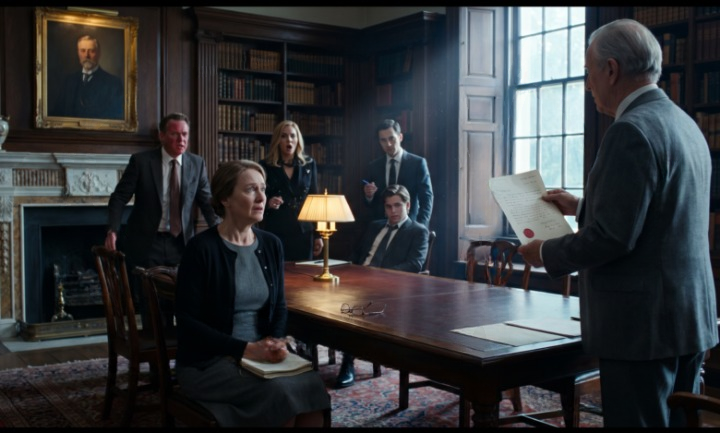
My Husband’s Children Called Me “Just the Nurse” — But His Final Secret, a Hidden Key, and One Last Letter Changed Their Hearts Forever | Part 3 (Final)
Posted onAugust 6, 2026 Byadmin
Arthur’s final plan was never about money—it was about truth.
When the small key inside an old shoebox unlocked more than a safety deposit box, decades of resentment, greed, and misunderstanding began to unravel. His children came expecting an inheritance. Instead, they were handed the greatest lesson of their lives.
I untied the string around the worn shoebox.
Inside were twenty-two envelopes, each carefully labeled with a different date.
The first read March 4.
The last read January 7.
Roy frowned.
“What is all this?”
I met his eyes.
“The truth.”
He forced a laugh.
“Dad was sick. He wasn’t thinking clearly.”
Mr. Katz calmly adjusted his glasses.
“Your father was ill, Mr. Whitmore.”
He paused.
“He was never confused.”
The room fell silent.
Arthur had often said pride was Roy’s greatest weakness—not his temper or his ambition.
Roy believed that if he argued long enough, reality would eventually agree with him.
But reality had been waiting patiently inside a shoebox.
I opened the first envelope.
Inside was a single page.
“March 4,” I read aloud.
Sandra sighed dramatically.
“Are we seriously reading through old papers?”
“This isn’t my diary,” I replied quietly.
“It’s your father’s record.”
Mr. Katz nodded.
“After his diagnosis, Arthur asked Helen to document every important conversation, every unusual incident, and every concern he had.”
Roy leaned forward.
“Concern?”
I looked directly at him.
“Your father realized long before any of us admitted it that some people were already more interested in his possessions than his life.”
Sandra slammed her hand against the chair.
“That’s ridiculous.”
I unfolded the page.
“March 4. Arthur met with Mr. Katz to discuss updating his estate plans.”
The attorney spoke softly.
“Arthur told me his existing will no longer reflected the people who truly stood beside him.”
Roy shook his head.
“He loved us.”
“He did,” Mr. Katz replied.
“He loved you until his final day.”
The words carried no anger.
Only sadness.
“He gave you opportunities. He forgave your absences. He kept believing you would come back to him.”
The lawyer paused.
“But love does not require ignoring reality.”
Arthur’s recorded voice filled the room once again.
“I didn’t make these recordings because I hated anyone.”
A brief silence followed.
“I made them because I was afraid.”
That single word brought back memories I had tried to bury.
Two years earlier, shortly after Arthur returned home from the hospital, he had squeezed my hand in the middle of the night.
“Helen,” he whispered.
“I’m here.”
“Promise me something.”
“Anything.”
“Don’t let them erase me.”
At first, I hadn’t understood.
Then I began hearing the conversations.
Roy asking about property values before asking about Arthur’s health.
Sandra discussing jewelry while doctors were still talking about treatment.
Arthur noticed everything.
He simply stopped pretending he didn’t.
That night he asked me to drive him to Mr. Katz’s office every month.
“What are we doing?” I had asked.
He smiled.
“Housekeeping.”
Only later did I realize he wasn’t organizing paperwork.
He was preserving the truth.
Back in the office, the recording continued.
“Helen, open envelope number seven.”
Inside was a photograph.
Roy immediately stood.
“Where did you get that?”
The photograph showed him outside Arthur’s bedroom holding one of Arthur’s prescription bottles.
His face lost all color.
Mr. Katz placed another document beside it.
“These pharmacy records show repeated early refills.”
Sandra frowned.
“So?”
I answered quietly.
“Arthur’s medication kept disappearing.”
Roy shook his head.
“You think I stole from my own father?”
“I don’t have to think.”
I pointed toward the documents.
“The records speak for themselves.”
Arthur’s voice returned.
“Roy… I knew about the missing medication.”
Roy froze.
“Helen counted my pills every evening.”
My eyes filled with tears.
Even then, Arthur had been protecting me.
“You believed I wouldn’t notice.”
His voice remained gentle.
“But I noticed everything.”
Roy pushed his chair back.
“This is insane.”
He headed for the door.
It wouldn’t open.
Mr. Katz spoke calmly.
“Arthur requested that everyone remain until the recording finished.”
The attorney pointed toward a small electronic lock.
“He wanted every word heard.”
Arthur continued.
“Helen… show them the second item.”
I reached into the shoebox.
Inside rested a small brass key.
Sandra stared.
“No…”
Mr. Katz nodded.
“That key opens Arthur’s safety deposit box.”
For the first time all afternoon, Roy looked genuinely nervous.
An hour later we stood inside the bank vault.
The manager unlocked the box.
Inside were only three things.
A photograph.
A notebook.
And a sealed envelope.
The photograph showed Arthur and me sitting together on the front steps of our home during our first year of marriage.
On the back he had written:
“The day I found my home.”
My hands trembled.
Inside the envelope waited another letter.
“My dearest Helen,
If you’re reading this, you’ve probably apologized to everyone for crying.
Please stop.”
I laughed through tears.
He knew me too well.
“You spent nine years caring for me and never once treated it like a burden.
You simply called it love.”
Then came the sentence that broke every remaining wall inside me.
“My children may inherit my belongings.
You inherited my heart.”
Mr. Katz quietly cleared his throat.
“Arthur also left instructions for Roy and Sandra.”
Roy looked up.
“What now?”
The attorney opened the notebook.
“For one full year, both of you must volunteer at the hospice where your father spent his final months before receiving your inheritance.”
Sandra stared in disbelief.
“You can’t be serious.”
Mr. Katz smiled gently.
“Arthur hoped you would remember what truly matters.”
The months that followed changed all of us.
At first, Roy complained about every hospice shift.
Then he met an elderly patient named Walter.
Walter had no visitors.
No family.
No one except volunteers.
Little by little, Roy stopped watching the clock.
He began bringing Walter newspapers, favorite snacks, and old baseball recordings.
When Walter passed away, Roy cried.
Not over money.
Not over inheritance.
Over a friend.
Sandra changed too.
She returned every piece of silver she had taken.
She apologized without excuses.
Eventually, she began volunteering beside me at the hospice.
One afternoon she admitted something I had suspected for years.
“I hated you because Dad trusted you.”
I smiled sadly.
“I never replaced your mother.”
She wiped away tears.
“I know that now.”
Months later another letter arrived.
This one came from Roy.
It contained only a few lines.
“You were never just his nurse.
You were the person who loved him when I didn’t.
I’m sorry.”
For the first time, I believed him.
A year after Arthur’s funeral, we gathered one final time in Mr. Katz’s office.
The lawyer played Arthur’s last recording.
“My children…
I never needed perfection.
I only hoped you would remember I was your father before I became your inheritance.”
No one spoke.
Then Roy quietly whispered,
“I miss him.”
Sandra nodded through tears.
“So do I.”
For the first time, they weren’t talking about property.
They were talking about their father.
Years later I sold the house.
Not because I had to.
Because I understood something Arthur had already known.
The house had never been the inheritance.
Neither was the money.
The greatest gift he left behind wasn’t measured in dollars.
It was trust.
It was forgiveness.
It was the chance to become better people before it was too late.
People often ask me what I inherited from my husband.
I always give the same answer.
“His faith in me.”
Because houses can be sold.
Money can disappear.
Possessions eventually fade.
But being deeply loved by someone who truly saw your worth…
That lasts forever.
The End.
