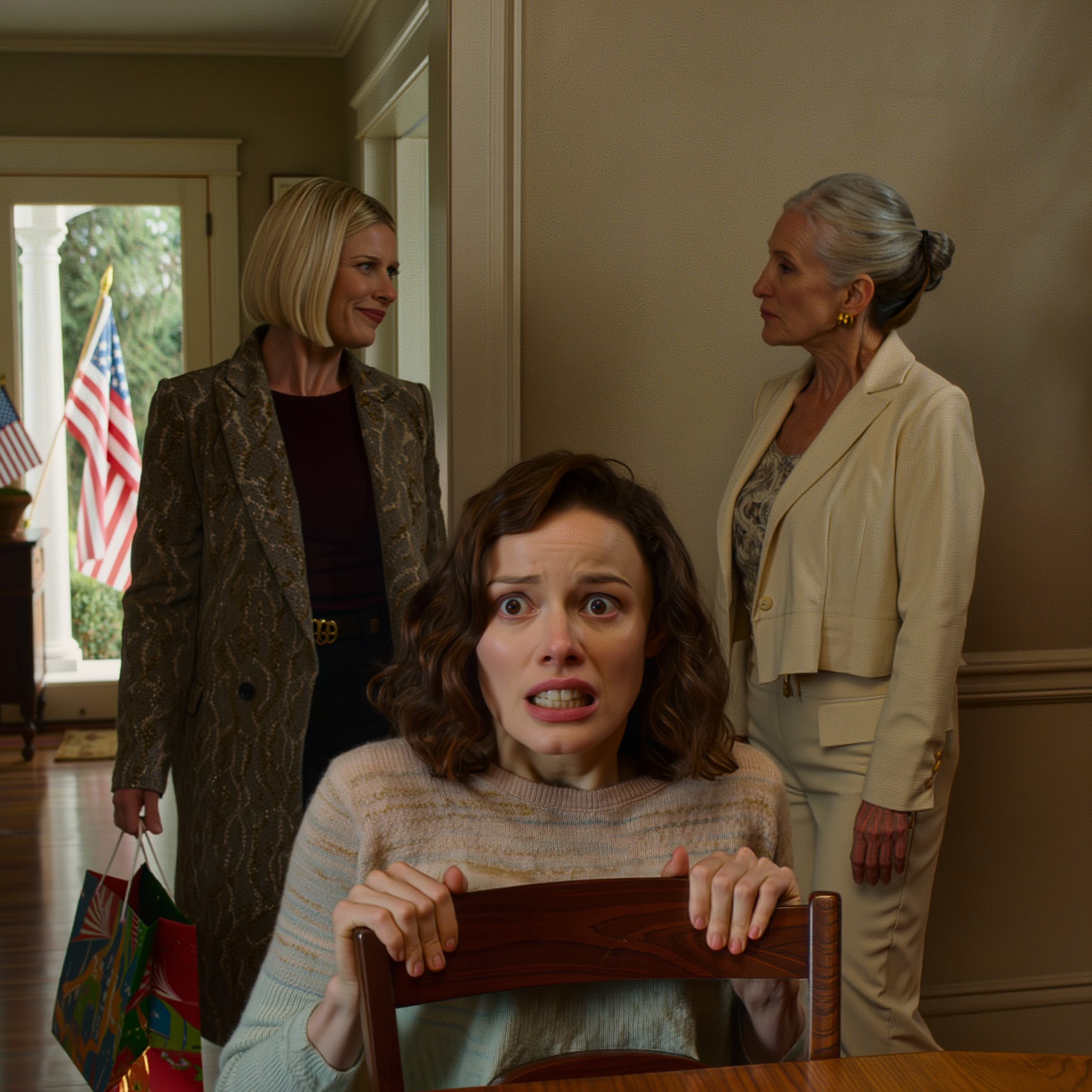
During a Family Dinner, My Sister Took My Five-Year-Old Daughter to Buy a Birthday Gift—and Came Back Alone
Part 1
The night my sister abandoned my five-year-old daughter at Target began with chicken casserole, paper napkins, and my mother pretending she had finally learned how to be kind.
That should have warned me.
My name is Clara, and for most of my life, I had been the daughter who made things inconvenient. My younger sister, Taryn, was the one my mother introduced with both hands on her shoulders, like presenting a prize. Taryn had the husband, Noah, the suburban house, the matching holiday pajamas, and the daughter who played piano badly but was applauded like Mozart.
I had Laya.
Laya was five years old, bright-eyed, noisy, soft-hearted, and impossible not to notice. She sang to grocery carts. She told cashiers about clouds. She wore glitter shoes with everything because she believed sparkles were “a kind of courage.” Her father left before she could say his name, so it had been just the two of us for years.
I should have kept it that way.
But I wanted family for her. I wanted Sunday dinners, cousins, birthday candles, someone besides me cheering when she learned to write her name. So I swallowed every little insult.
When Mom praised Madison’s handwriting and ignored Laya’s drawing, I smiled.
When Taryn said, “Laya sure loves being the center of attention,” I pretended not to hear.
When Mom told me I was “raising her loud,” I laughed like it was a joke.
That Tuesday evening in March was warm enough that my mother, Ivy, opened the dining room windows. The house smelled like baked chicken, lemon floor cleaner, and the lilac candle she always lit when company came. Outside, sprinklers clicked across the lawn in slow circles.
Laya sat beside me at the table, wearing a blue dress with tiny white flowers. She had picked it herself because she said it made her look “like springtime with knees.”
Across from her, Madison sat stiffly in a pink cardigan, pushing peas around her plate.
Laya was bursting with news.
“My teacher said I get to be a flower in the school play,” she told everyone, waving her fork until I gently lowered her hand. “Not just any flower. A yellow one. I have to sway when the bee comes.”
Noah smiled. “That sounds important.”
“It is,” Laya said seriously. “Without flowers, bees get very sad.”
I laughed.
For a second, everything almost felt normal.
Then I saw Taryn watching my daughter.
Not smiling. Not really.
Her lips were curved, but her eyes were flat. Madison glanced at her mother, then back at Laya, and something sour moved across her little face.
My mother cleared her throat. “Madison got a wonderful score on her spelling test.”
“That’s great,” I said quickly. “Good job, Madison.”
Madison shrugged.
Laya turned to her cousin. “I can help you make a flower costume if you want. Even if you’re not in the play.”
Taryn’s fork clicked against her plate.
“Madison doesn’t need your help, sweetheart,” she said.
The word sweetheart sounded dipped in vinegar.
I felt the old tension crawl up my spine. My goal that night had been simple: eat dinner, let Laya enjoy herself, leave before anyone made me regret coming.
Then Taryn suddenly smiled.
“You know what, Laya?” she said. “Since you’ve been such a good girl tonight, maybe Aunt Taryn should take you to pick out a little birthday surprise.”
Laya froze with delight.
“For me?”
“For you,” Taryn said. “There’s a toy aisle calling your name.”
My stomach tightened.
Laya’s birthday had been two weeks earlier. Taryn had brought nothing then except a card with no message inside. Now she wanted to take my daughter shopping on a school night after dinner?
“I don’t know,” I said. “It’s getting late.”
Mom looked at me over her wineglass. “Clara, don’t be difficult. Your sister is trying to do something nice.”
That sentence had trapped me my whole life.
Don’t be difficult.
Don’t ruin it.
Don’t make your sister feel bad.
Laya tugged my sleeve. “Please, Mommy? I’ll stay close. I promise.”
Taryn was already standing, purse in hand. “Target is ten minutes away. We’ll be back before dessert.”
Noah looked down at his plate.
That was the first real clue.
Noah was not a bold man, but he usually made some joke when Taryn got dramatic. That night, he stayed silent, shoulders tight, like he was listening for something only he could hear.
“Just a quick trip,” Taryn said.
Madison stared at the table.
“Mommy, please,” Laya whispered.
I looked at my daughter’s hopeful face.
I told myself I was paranoid. I told myself Taryn might be trying. I told myself family could still surprise me in good ways.
“All right,” I said. “But you stay with Aunt Taryn the whole time.”
“I will!”
Laya threw her arms around my waist, then skipped to the door beside Taryn.
Before leaving, Taryn glanced back at me.
There was something in her expression I did not understand yet.
Not warmth.
Victory.
They left at 7:32 p.m.
I remember because the oven clock glowed green above my mother’s shoulder.
The door closed behind them. The house settled into a strange quiet. Madison went to the living room with her tablet. Noah helped clear plates, moving too carefully. Mom hummed as she wrapped leftovers.
At 8:15, I checked my phone.
Nothing.
At 8:47, I called Taryn.
Voicemail.
At 9:04, I called again.
Voicemail.
“Mom,” I said, trying to keep my voice calm, “they should be back by now.”
She didn’t even turn from the sink. “Taryn loves to shop.”
“With my five-year-old?”
“Don’t hover.”
At 9:28, headlights swept across the curtains.
I stood so fast my chair scraped the floor.
The front door opened.
Taryn walked in alone.
She held a Target bag in one hand and her phone in the other. She looked flushed, annoyed, and completely empty of fear.
I looked behind her.
No Laya.
My voice came out small.
“Where is my daughter?”
Taryn lifted one eyebrow.
Then she smiled.
And that was the moment I realized the night had only just begun.
Part 2
For one second, my brain refused to understand the empty doorway.
It did something kind, or maybe stupid. It told me Laya was behind Taryn, tying her shoe. It told me my daughter had stopped on the porch to look at a moth near the light. It told me Taryn was about to roll her eyes and say, “Relax, Clara, she’s in the car.”
But Taryn only stepped farther into the hallway and dropped the Target bag on the bench.
Inside it, something plastic rattled.
“Where is Laya?” I asked again.
My sister’s face changed slowly, like she was enjoying every muscle of it.
“Oh,” she said. “Sorry. I must have forgotten her at the store.”
The room seemed to lose air.
Noah’s head snapped up.
My mother dried her hands on a towel with calm, careful movements.
“What do you mean you forgot her?” My voice cracked. “Taryn, where is my child?”
“At Target,” she said, as if I were slow. “Maple Street.”
My hands went cold.
“You left my five-year-old alone at Target?”
Taryn shrugged. “She was at customer service. She’s fine.”
I looked at my mother, waiting for horror. Anger. Something human.
Instead, Mom sighed.
“Don’t panic, Clara. You’ll find her there eventually.”
Eventually.
That word slid under my skin and stayed there.
Noah whispered, “Ivy.”
Mom ignored him.
Taryn laughed, light and sharp. “Maybe next time she’ll learn not to steal Madison’s thunder.”
I stared at her.
The pieces moved toward each other slowly.
Madison’s silence. Noah’s tight shoulders. My mother’s sudden kindness. Taryn’s strange smile before leaving.
This had not been an accident.
“What did you do?” I asked.
Taryn’s smile vanished. “Oh, please. Don’t make that face.”
“What did you do to my daughter?”
“I taught her a lesson.”
My vision blurred at the edges.
“She is five.”
“And Madison is seven,” Taryn snapped. “But does anyone care about that? No. Every dinner, every birthday, every family gathering, everyone has to listen to Laya sing or tell stories or show some drawing like she invented crayons.”
“Because she’s a child.”
“She’s an attention hog.”
The words were so ugly, so absurd, that for half a second I could only stare.
My mother stepped beside Taryn. “Your sister has a point. Laya does need to learn that the world doesn’t revolve around her.”
I felt something inside me tear loose.
“The world?” I said. “She was excited about a school play.”
“She was performing,” Mom said. “Always performing.”
Noah finally moved. “This is insane. Taryn, you need to tell Clara exactly where she is.”
“She knows where,” Taryn said. “Maple Street Target. Customer service. I’m sure some employee is babysitting her.”
Babysitting.
My daughter was alone in a store at night, abandoned by someone she trusted, and they were discussing her like a misplaced shopping bag.
I grabbed my purse and keys.
Taryn leaned against the wall. “You’re welcome, by the way. Maybe she’ll appreciate you more now.”
I turned back.
For a second, I wanted to hit her. I had never wanted to hurt anyone that badly in my life. My hand actually trembled with it.
Then I pictured Laya waiting under bright store lights, her little blue dress, her glitter shoes, her face crumpling when Taryn didn’t come back.
That image saved me from wasting one more second in that house.
“Which Target?” I demanded.
“Maple Street,” Taryn repeated. “I already told you.”
Mom folded her arms. “And don’t make this into some police drama.”
Police.
The word clicked into place.
But first, Laya.
I ran to my car so fast I nearly tripped on the porch step. The night air smelled like wet grass and exhaust. My hands shook as I started the engine. The clock on the dashboard said 9:36.
She had been gone for more than two hours.
I don’t remember every turn to Target. I remember red lights feeling personal. I remember gripping the steering wheel so hard my fingers hurt. I remember whispering, “Please be there, please be there, please be there,” until the words became breath.
The Maple Street Target glowed in the dark like a giant red warning sign.
I parked crooked across two spaces and ran inside.
The store smelled like popcorn, floor wax, and new plastic. A teenage cashier looked up as I rushed past. The customer service desk was near the front, under harsh white lights.
And there was Laya.
She sat in a chair behind the counter, knees pulled to her chest, holding a stuffed dinosaur someone must have given her. Her face was swollen from crying. A woman in a red vest sat beside her, one hand resting near but not touching, careful and kind.
“Laya!”
My daughter’s head jerked up.
“Mommy!”
She ran to me so hard the impact knocked the air out of my lungs. I dropped to the floor and wrapped both arms around her.
She smelled like tears, store air, and the strawberry shampoo I had used that morning.
“I waited,” she sobbed into my neck. “Aunt Taryn said she was getting the car, but she didn’t come back. I stayed where she told me. I was good. I was good, Mommy.”
That broke me.
“You were good,” I said, holding her tighter. “You did everything right. I’m here.”
The Target employee crouched beside us. Her name tag read Patricia.
“I’m so glad you’re here,” she said softly. “I called the police about twenty minutes ago. I tried calling the number your sister left, but it wasn’t real.”
I looked up.
“What?”
Patricia’s face tightened with anger she was trying to hide from Laya.
“She wrote down a fake number. I asked your daughter if she knew yours, but she only knew your first name and that you drive a blue car.”
I pulled Laya closer.
Taryn had not just walked away.
She had made sure the store couldn’t easily reach me.
A cold, clear feeling replaced my panic.
The automatic doors opened behind me, and two police officers walked in.
One was tall, broad-shouldered, with a shaved head and tired eyes. The other, a woman with a notebook already in hand, scanned the customer service area and came straight toward us.
“I’m Officer Drummond,” the man said gently. “Is this your daughter?”
“Yes,” I said.
His gaze moved to Laya, then back to me.
“Ma’am, we need to ask you some questions.”
I nodded, still on the floor with my daughter clinging to me.
And as I told him what my sister had said, what my mother had said, what they had planned and laughed about, his face changed.
Not shock.
Fury.
Quiet, professional fury.
When I finished, Officer Drummond looked toward the dark windows, then back at me.
“Your sister didn’t forget your child,” he said. “She abandoned her.”
My arms tightened around Laya.
Then he said the sentence that turned my family dinner into a crime scene.
“We’re going back to that house.”
Part 3
I followed the police back to my mother’s house with Laya asleep in the back seat.
She had cried herself empty on the ride, one hand wrapped around my fingers until she finally drifted off, still hiccupping in her sleep. Patricia from Target had tucked the stuffed dinosaur beside her before we left.
“His name is Mr. Brave,” she told Laya. “He stays with kids who did hard things.”
I wanted to hug her. I wanted to collapse. I wanted to turn around, take Laya home, lock the door, and pretend my family no longer existed.
But Officer Drummond was right.
What Taryn did was not a family fight.
It was child abandonment.
By the time we reached Mom’s street, my fear had become something sharper. The porch lights were still on. Through the front window, I could see movement in the living room. They had not even gone looking for her.
They had stayed.
Waiting, maybe, for me to come back humbled.
The officers asked me to remain near the doorway with Laya while they went in first. I carried her on my hip despite the weight, despite the way my arm burned. She stirred but didn’t wake.
Inside, the house smelled like coffee.
Coffee.
My mother had made coffee after leaving my daughter alone in a store.
Taryn sat on the couch scrolling through her phone. Madison was nowhere in sight, probably upstairs. Noah stood near the fireplace, pale and rigid.
Taryn looked up with a scowl. “Seriously? You brought cops?”
Officer Thompson stepped forward. “Taryn Williams?”
“Yes?”
“Stand up, please.”
Taryn laughed once. “Why?”
“You’re being placed under arrest for child abandonment and endangering the welfare of a minor.”
The phone slipped from her hand onto the couch.
“What? No. That’s ridiculous.”
My mother rushed in from the kitchen. “Officers, there’s been a misunderstanding.”
Officer Drummond turned to her. “Were you aware your granddaughter had been left alone at a retail store for more than two hours?”
Mom’s face rearranged itself too quickly.
“I—I thought Taryn was just running late.”
I stared at her.
“No, you didn’t.”
Her eyes cut to me.
“You said I’d find Laya there eventually,” I said. “You knew.”
Officer Thompson looked at my mother. “Is that true?”
Mom opened her mouth.
Taryn, panicking now, pointed at her. “She knew. This wasn’t just me. We talked about it. She said Laya needed to learn too.”
The room went silent.
Even Noah closed his eyes.
Mom whispered, “Taryn.”
“You’re not pinning this on me,” Taryn snapped. “You agreed.”
Officer Thompson began writing.
My mother’s face went gray.
“Agreed to what?” Officer Drummond asked.
Taryn’s voice shook with anger now, not remorse. “To teach her a lesson. Not to hurt her. She was in a store. People were around.”
“She is five years old,” Officer Drummond said.
“She’s spoiled,” Taryn shot back. “Everyone acts like she’s some little angel.”
Laya shifted in my arms, and every adult in the room froze.
Her eyes opened halfway.
“Mommy?”
“I’ve got you,” I whispered. “Go back to sleep.”
She saw Taryn across the room and whimpered.
That small sound did more than any accusation could.
Officer Drummond’s jaw tightened.
Taryn looked away.
The handcuffs came out.
My mother began crying then, but not for Laya. I knew her sounds. These were the tears she used when consequences arrived. She kept saying, “This is too much,” as if the problem were the response and not the cruelty that caused it.
Noah finally spoke.
“I told you this was wrong,” he said quietly.
Taryn turned on him. “Shut up.”
“No,” he said, voice breaking. “Not this time.”
That was the first crack in the wall.
Both Taryn and my mother were taken away that night. Mom kept insisting she needed her medication. Taryn kept demanding Noah call their lawyer. Neither asked if Laya was okay.
Not once.
I took my daughter home.
I did not sleep.
Every time I closed my eyes, I saw her behind the customer service desk, trying to be good while waiting for someone who had already decided not to come back.
Laya woke at 3:12 a.m. screaming.
For twenty minutes, she clung to me and cried, “I stayed there. I stayed where she said.”
I held her on the bathroom floor because she had run there in confusion, and I rocked her under the yellow night-light until my back ached.
“You did nothing wrong,” I told her again and again. “Aunt Taryn did something wrong. Grandma did something wrong. Not you.”
But I could tell she didn’t believe it yet.
By morning, my phone had started.
Noah called first.
I let it go to voicemail.
Then Aunt Brenda.
Then a cousin.
Then a number I didn’t know.
Family moves fast when reputation catches fire.
I listened to Noah’s message only because he sounded destroyed.
“Clara, I’m sorry. I should have stopped them. I didn’t know they were actually going to do it. I thought they were just venting. God, that sounds pathetic. I’m so sorry. Please tell Laya… no, don’t. I don’t deserve that. I’ll tell the police everything.”
I saved it.
Then I called the number Officer Drummond had given me for Detective Sienna Blake.
She answered with a voice that sounded awake in a way I envied.
“Ms. Bennett?”
“Yes.”
“I’ve been assigned to your daughter’s case. I want you to know we’re taking this seriously.”
I looked at Laya sleeping on the couch, Mr. Brave tucked under her arm.
“Good,” I said. “Because they planned it.”
There was a pause.
“What makes you say that?”
I told her about Taryn’s smile, my mother’s comment, the fake number, Noah’s voicemail.
Detective Blake was quiet for a moment.
Then she said, “Do not delete anything. We’re going to need every message, voicemail, and detail you can remember.”
“Detective?”
“Yes?”
“What happens now?”
Her voice became careful.
“Now we find out how long they had been thinking about hurting your daughter.”
A chill moved through me.
Because until that moment, I thought I had seen the whole cruelty.
I had not.
Part 4
Detective Blake had the patience of a surgeon and the eyes of someone who missed nothing.
She came to my apartment two days after the arrest, carrying a leather notebook and two coffees. One for her, one for me. Mine was still warm enough to fog the plastic lid.
“I figured you might not be sleeping,” she said.
I almost laughed.
Sleeping had become impossible. Laya woke every few hours, terrified I had left. During the day, she followed me from room to room, even to the bathroom. If I stepped onto the balcony to take a call, she cried until I came back inside.
My goal was to make her feel safe.
The conflict was that safety had become a language neither of us spoke fluently anymore.
Detective Blake sat at my kitchen table while Laya colored in the living room within sight. The apartment smelled like crayons, coffee, and the lavender detergent I used on Laya’s blanket because familiar smells seemed to calm her.
“Tell me about the family dynamic,” Detective Blake said.
I gave a tired smile. “How much time do you have?”
“As much as it takes.”
So I told her.
About Taryn being the golden child. About Madison being praised for breathing while Laya was corrected for shining. About my mother keeping score between little girls who should have been allowed to love each other. About birthday parties where Laya was told to sit down, be quiet, let Madison have her moment, even when the moment had nothing to do with Madison.
Detective Blake wrote steadily.
“Did Taryn ever threaten Laya before?”
“Not directly,” I said. Then stopped.
Because memory is slippery when you’ve spent years explaining it away.
“Actually… she would say things.”
“What kind of things?”
I looked toward Laya. She was drawing a purple house with no doors.
“Taryn once told her, ‘If you keep showing off, people won’t want you around.’ I told myself she was just being snippy.”
Detective Blake’s pen paused.
“And Ivy?”
“My mother called Laya attention-seeking. Dramatic. Too much.” My throat tightened. “She’s five.”
Detective Blake’s expression did not change, but her eyes sharpened.
“Children internalize labels quickly.”
“I know that now.”
Over the next week, the investigation widened.
Noah gave a formal statement. At first, he tried to soften things. He said Taryn had been stressed, jealous, overwhelmed. Detective Blake listened, then played his voicemail to me back for him and asked, “Which part of this sounds like stress?”
That was when he broke.
He told them Taryn had been complaining about Laya for months. She called my daughter “the little princess,” “the spotlight thief,” “Clara’s performing monkey.” He admitted he had heard Taryn say someone needed to “take her down a peg.”
When Detective Blake asked if Ivy knew, Noah cried.
“She encouraged it,” he said.
The first real shock came from the phones.
With warrants, investigators recovered text messages between Taryn and my mother.
Taryn: She did it again. Whole dinner turned into the Laya show.
Mom: Madison looked crushed.
Taryn: Clara just sits there smiling like her kid is adorable.
Mom: That child needs humility.
Taryn: I’m serious. I’m going to teach her.
Mom: It’s overdue.
Reading those messages felt like swallowing glass.
But the worst was still coming.
Detective Blake called me late Friday afternoon.
“Clara, I need to prepare you. We found evidence this was premeditated beyond the night itself.”
I sat down on the edge of Laya’s bed.
“What evidence?”
“Taryn searched child abandonment laws.”
My hand tightened around the phone.
“She what?”
“Search history. Multiple times. She also searched store policies on unattended children and called the Maple Street Target anonymously last week asking what staff do if a child is separated from an adult.”
The room tilted.
“She researched how to abandon my daughter?”
“Yes.”
I looked at Laya’s stuffed animals lined against the pillow. Unicorn. Bear. Mr. Brave. A soft rabbit missing one ear.
Detective Blake continued, “There’s more. We believe she did a practice run with Madison.”
I closed my eyes.
“What does that mean?”
“Taryn took Madison to the same Target a week before the incident. She made Madison stand near customer service while she watched from another aisle. Madison told a child advocate she was scared and thought she had done something wrong.”
A sound came out of me that I did not recognize.
Not just Laya.
Madison too.
That was the emotional turn I had not expected. My rage at Taryn had been clean when I thought only my daughter had been her target. Now it became more complicated, because Madison had not been the spoiled rival my family pretended she was.
She was another child trapped inside Taryn and Ivy’s poison.
“I want CPS involved,” I said.
Detective Blake was quiet for a beat.
“I think that would be appropriate.”
So I made the call.
I gave them everything I knew. The arrest. The text messages. The practice run. Madison’s anxiety. Taryn’s threats. My mother’s role. The worker on the phone took it seriously, but I could still hear myself shaking.
After I hung up, I found Laya standing in her doorway.
“Mommy?”
I crouched. “Hey, bug.”
“Are you mad?”
“No. Not at you.”
“Is Aunt Taryn in trouble because I cried?”
I pulled her into my arms.
“No. Aunt Taryn is in trouble because she did something wrong.”
Laya pressed her face into my shoulder.
“Did I steal Madison’s thunder?”
I went still.
“What?”
Her voice was tiny. “Aunt Taryn said I do that. Grandma said Madison gets sad because I’m too shiny.”
Too shiny.
I held my daughter while fury moved through me so quietly it felt almost calm.
“No,” I said. “You did not steal anything. You are allowed to shine.”
She didn’t answer.
That night, after she finally slept, I opened my laptop and began writing down every comment, every slight, every strange moment I had dismissed to keep peace.
By midnight, I had six pages.
By morning, I had remembered something that made my stomach drop.
At Madison’s birthday party, Taryn had lost sight of Laya for fifteen minutes.
And when I found my daughter alone in the garage, Taryn had smiled the same way.
Part 5
I had buried the garage memory because nothing happened.
That is what adults tell themselves when a child is frightened but unharmed. Nothing happened. She was fine. Don’t make a scene. Don’t be dramatic.
Madison’s sixth birthday party had been held in Taryn’s backyard the previous summer. Pink balloons, a rented bounce house, cupcakes with edible glitter, and my mother floating around like the queen of a small, exhausting kingdom.
Laya had brought Madison a handmade card with a drawing of the two of them holding hands. Madison loved it. She smiled for real, not the tight little smile she used when adults were watching.
Then Taryn saw.
“Oh,” she said. “Another Laya production.”
I should have left then.
Instead, I stayed.
An hour later, Laya disappeared.
I found her in the garage behind a stack of folding chairs, red-faced and sniffling.
“Aunt Taryn said I needed a quiet break,” she told me.
When I confronted Taryn, she laughed and said, “She was overstimulated.”
My mother told me I was overreacting.
Nothing happened.
Except something had.
My daughter had been taught, little by little, that being herself meant being removed.
I gave that memory to Detective Blake.
She listened without interrupting, then said, “Patterns often look obvious only after the worst event.”
The CPS worker, Amanda Torres, called me the next morning. Her voice was warm but brisk, like someone used to walking into burning houses with a clipboard.
“We’re opening an investigation regarding Madison’s safety,” she said.
“Will Taryn know I called?”
“She may infer it. But the report itself is confidential.”
I almost said I didn’t care.
But I did care. Not because I was afraid of Taryn’s anger anymore. Because every new conflict meant Laya might hear more whispers, more blame, more adult words pressing against her little world.
Amanda interviewed me first, then Noah, then Madison with a child advocate present.
Noah called me afterward.
I almost didn’t answer.
“Clara,” he said. “I didn’t know.”
His voice was wrecked.
I stood in my kitchen washing a mug that was already clean.
“Which part?”
“All of it. The threats. The park.”
My hand stopped.
“What park?”
Silence.
Then Noah said, “Amanda told me Madison said Taryn once drove her to a park, made her get out of the car, and drove around the block because Madison talked back.”
I gripped the counter.
“How old was she?”
“Six.”
The mug slipped from my hand into the sink and cracked against the metal basin.
Noah began crying. “I wasn’t there. I work so much. I thought Taryn was strict, but I didn’t know she was scaring her like that.”
I wanted to comfort him.
Then I remembered him sitting silent at dinner while Taryn took Laya out the door.
“You knew enough to feel uncomfortable,” I said.
He inhaled sharply.
“Yes,” he whispered. “I did.”
That was all I could take.
I hung up.
The new information kept coming.
Madison’s teacher told Amanda that Madison panicked whenever pickup was late. She had once cried so hard the office called Noah because she thought her mother had “left her like Laya.” Another teacher said Madison apologized constantly for ordinary mistakes and asked whether “good girls get kept.”
Good girls get kept.
I wrote that phrase down and stared at it until the page blurred.
The emergency family court hearing happened three days later.
I was not required to attend, but Noah asked if I would write a statement. I did. Not for him. For Madison.
I wrote that Madison deserved safety. I wrote that Taryn’s cruelty had harmed both girls. I wrote that whatever jealousy adults had created between the children was not Madison’s fault, and she should not be punished for what her mother and grandmother had taught her to feel.
The judge granted Noah temporary custody.
Taryn was allowed no unsupervised contact with Madison.
My mother called me from an unknown number that evening.
I answered because I was tired and not thinking.
“You called CPS,” she said.
No hello. No how is Laya.
Just accusation.
“Yes.”
“You vindictive little bitch.”
The words were so familiar in tone, if not exact language, that I felt oddly calm.
“Madison needed protection.”
“Madison was fine until you destroyed her home.”
“No, Mom. Madison was scared before I made the call. You just didn’t care because her fear served you.”
She made a sound of disgust. “You think you’re so righteous. You have always resented Taryn.”
“I resented the way you worshipped her. That’s different.”
“She is your sister.”
“Laya is my daughter.”
A pause.
Then Mom said, “Children need to learn they aren’t special.”
I looked toward the living room, where Laya sat coloring beside Mr. Brave.
“No,” I said. “Children need to learn they are safe.”
I hung up and blocked the number.
The criminal case moved forward fast enough to make everyone dizzy.
Taryn’s bail was set high. Ivy’s too. They mortgaged the house to pay lawyers. Taryn was suspended from her dental hygienist job. My mother lost her substitute teaching work. Rumors spread through town like smoke under doors.
At first, relatives called to scold me.
Then the text messages leaked in court filings.
Calls slowed.
Then stopped.
Taryn made everything worse by posting online.
I saw the screenshot because three different people sent it to me, probably expecting me to react.
I can’t believe people are acting like I left a child in the woods. She was at Target for a couple hours. Kids today are coddled. My niece needed to learn that she can’t always be the center of attention. I was trying to help her.
I read it once.
Then I forwarded it to Detective Blake and my lawyer.
By then, I had hired David Kim for the civil side. He was calm, meticulous, and had the dryest sense of humor I had ever heard.
When he read the post, he said, “Well, that’s certainly a choice.”
“Is it useful?”
“It is a gift wrapped in stupidity.”
For the first time in weeks, I laughed.
Then David said, “Clara, I think we should discuss a civil claim.”
I looked at him across his desk.
“I don’t care about money.”
“I know. But therapy costs money. Future care costs money. And people like Taryn and Ivy often understand consequences best when they come with receipts.”
That night, I watched Laya sleep.
Her hand rested on Mr. Brave’s head. Her face looked peaceful for the first time in days.
I thought about my mother’s coffee brewing after the abandonment. Taryn laughing. Madison asking if good girls get kept.
Then I called David.
“File it,” I said.
And that was when my family stopped calling me dramatic and started calling me dangerous.
Part 6
The first time Laya met Dr. Ingrid Lowe, she hid behind my legs and refused to say her name.
Dr. Lowe did not push.
She sat cross-legged on the carpet in her office, which smelled faintly of peppermint tea and Play-Doh, and introduced herself to Mr. Brave instead.
“Well,” Dr. Lowe said seriously, “I’m very glad a dinosaur came today. Dinosaurs are excellent at noticing big feelings.”
Laya peeked around my knee.
“He’s not a dinosaur. He’s a bravery dragon.”
Dr. Lowe nodded. “My mistake. Even better.”
That was how therapy began.
Slowly.
Gently.
With crayons, sand trays, puppets, and enough patience to rebuild a small bridge inside my child. The goal was healing. The conflict was that Laya thought healing meant proving she had not deserved to be left.
For weeks, she asked the same questions in different forms.
“Was I too loud?”
“Did Madison hate me?”
“Did Grandma think I was bad?”
“If I don’t sing, will people stay?”
Every answer I gave felt both necessary and insufficient.
“You are not too loud.”
“Madison was confused, not hateful.”
“Grandma was wrong.”
“You never have to become smaller to be loved.”
Some days she believed me.
Some days she didn’t.
Meanwhile, Detective Blake kept digging.
She interviewed extended family, neighbors, teachers, Taryn’s friends, my mother’s friends. The picture that emerged was uglier than I expected.
Taryn had been telling people for almost a year that Laya was spoiled. She said I encouraged “main character behavior,” that Laya bullied Madison with cuteness, that family members ignored Madison because Laya was “flashier.” She painted my five-year-old as a manipulator in glitter shoes.
My mother had kept a notebook.
When Detective Blake told me, I thought I misunderstood.
“A notebook?”
“Yes,” she said. “Ivy documented family gatherings.”
“What does that mean?”
Detective Blake’s voice turned careful. “She recorded how often Laya received attention compared to Madison.”
I sat down.
“She counted compliments?”
“Yes.”
Later, David obtained copies through discovery.
The entries were written in my mother’s tidy handwriting.
March 3: Laya sang after dinner. Conversation focused on her for 12 minutes. Madison quiet.
February 18: Laya received 3 compliments on dress. Madison received 1.
January 22: Clara encouraged Laya to tell school story. Attention-seeking behavior increasing.
December 9: Madison upset after Laya showed drawing. This imbalance cannot continue.
I could barely read them.
My mother had been building a case against a child.
Not against bad behavior. Not cruelty. Not harm.
Joy.
Laya’s joy had offended them.
The emotional turn came when I saw Madison’s interview notes.
Madison told Amanda that Grandma Ivy said Laya “stole sparkle.” She said Grandma told her, “Good girls wait their turn, but selfish girls make everyone look.” She admitted she had felt angry at Laya sometimes, but also sad because she liked playing with her cousin when adults weren’t listening.
That broke me in a new way.
Taryn and Ivy had not only hurt my daughter. They had poisoned Madison against someone she might have loved.
Noah called me after Madison’s second therapy appointment.
“She asked if she can write Laya a letter,” he said.
I was quiet.
“You can say no,” he added quickly. “I told her you might.”
“What does she want to say?”
“That she’s sorry she got jealous. That she didn’t know her mom would leave Laya. That she misses playing unicorn hospital.”
Unicorn hospital.
The girls had invented that game two years earlier. Laya always diagnosed the unicorns with “too much sneezing.” Madison made paper bandages.
I closed my eyes.
“Noah, I don’t know.”
“I understand.”
“I don’t want Laya carrying Madison’s guilt.”
“Neither do I.”
His voice sounded different now. Less weak. More awake.
“I’m trying to do right by my daughter,” he said.
“Then start by not making my daughter part of Madison’s recovery unless Dr. Lowe thinks it’s safe.”
“That’s fair.”
It was the first conversation with him that did not make me want to hang up.
A month after the abandonment, Dr. Lowe suggested Laya might benefit from drawing a picture for Madison, whether or not she sent it.
“She has mixed feelings,” Dr. Lowe said. “That’s normal. Children can miss someone and feel afraid of them at the same time.”
Laya drew two girls holding hands under a rainbow.
Then she added a grown-up with angry eyebrows far away behind a fence.
“Who is that?” Dr. Lowe asked.
“Aunt Taryn,” Laya said. “She has to stay outside until she learns not to leave kids.”
Dr. Lowe looked at me.
I cried in the car afterward, quietly, while Laya sang to Mr. Brave in the back seat.
The civil lawsuit escalated.
David filed claims for intentional infliction of emotional distress, negligent supervision, and damages related to therapy. Taryn’s lawyer tried to frame it as a “family misunderstanding.” David responded with the notebook, the texts, the fake number, the Target security footage, and Taryn’s Facebook post.
“Misunderstandings don’t usually require burner-level planning,” he said.
The Target footage was the hardest thing I watched.
Taryn walking Laya to customer service.
Taryn bending down, smiling.
Laya nodding seriously.
Taryn leaving.
My daughter waiting.
Five minutes.
Ten.
Twenty.
At thirty-one minutes, Laya approached Patricia.
At forty, she began crying.
At ninety, Patricia sat beside her.
At one hundred and twenty-three, I ran into frame.
I watched it once and never again.
Taryn’s criminal attorney argued she intended to come back.
Detective Blake found a text she sent my mother from the parking lot after leaving Target.
Done. Let’s see how long Clara takes to notice.
My mother replied:
Good. Stay calm.
That message became the nail in the coffin.
Then came Taryn’s group chat.
Taryn: I’m going to leave Laya at Target. Maybe being abandoned will teach her humility.
Friend: That seems harsh.
Taryn: She’ll be fine. Employees will babysit.
Ivy: It’s time someone taught that child the world doesn’t revolve around her.
When I read it, I did not scream.
I got very quiet.
That scared David more than if I had screamed.
“Clara?” he said.
“I’m fine.”
“You’re not.”
“No,” I admitted. “But I will be.”
That night, Laya asked if we could put stars on her ceiling.
“Why?” I asked.
“So if I wake up scared, I can remember I’m still home.”
I ordered glow-in-the-dark stars online.
We spent Saturday sticking them above her bed. Some were crooked. One fell on my forehead. Laya laughed so hard she got hiccups.
For ten minutes, she was just a little girl with stars on her hands.
Then my phone buzzed.
Unknown number.
The message said:
You got what you wanted. Taryn might lose Madison forever. Are you happy now?
I looked at Laya, reaching up to press one more star against the ceiling.
And I realized something with absolute clarity.
No one in my old family understood that this was never about happiness.
It was about safety.
Part 7
Taryn’s trial began eight months after the night at Target.
By then, I had learned that legal time is cruel. It drags when you need answers and accelerates when you are not ready. One day you are filling out therapy forms and buying glow stars. The next, you are sitting on a wooden bench outside a courtroom, holding your daughter’s sweater in your lap because she wore it during her closed-session testimony.
The prosecutor, Megan Hollister, met with me before opening statements.
She was tall, composed, and had a voice that made lies seem embarrassed to exist.
“We have a strong case,” she said. “But I want you prepared. The defense will try to minimize this.”
“They’ll say it was a mistake.”
“Yes.”
“It wasn’t.”
“No,” Megan said. “It was not.”
Laya did not have to testify in open court. The judge allowed her recorded interview with a child advocate to be used, along with limited closed-session questioning. I was grateful and furious that any of it had to happen.
My goal was simple: get through the trial without letting it swallow us.
The conflict was seeing Taryn again.
She walked into court wearing a beige blouse, dark pants, and the wounded expression of someone who had practiced looking misunderstood. Her hair was neatly curled. Her makeup was soft. If you didn’t know her, you might think she was a tired mother caught in a terrible mistake.
Then Megan played the Target footage.
The courtroom watched Taryn leave my daughter behind.
Taryn looked down at the table.
I watched the jury instead.
One woman pressed her lips together. A man in the back row shook his head slightly. Another juror looked at Taryn with open disgust.
Patricia from Target testified first.
She wore a red blouse instead of her uniform, but I recognized her gentle hands immediately.
“She kept asking if she had done something wrong,” Patricia said, voice shaking. “She said her aunt told her to wait and good girls wait. I tried the number the aunt left, but it didn’t work. After a while, I became concerned that no one was coming back.”
Taryn’s lawyer asked, “But the child was physically safe in the store, correct?”
Patricia turned to him.
“She was terrified.”
That was all she said.
It landed harder than any speech.
Noah testified next.
He looked thinner, older, like the months had scraped him clean. He admitted he had heard Taryn talk about punishing Laya. He admitted he had failed to take it seriously. He admitted my mother was part of the conversations.
The defense tried to make him sound bitter because of the divorce.
Noah looked at the jury and said, “I’m bitter because my wife terrorized two children, including our own.”
Taryn flinched.
I did not.
Detective Blake walked the jury through the searches, the fake number, the practice run, the texts, the notebook, the group chat. Megan projected the messages onto a screen.
Done. Let’s see how long Clara takes to notice.
I had seen it before.
Still, it hollowed me out.
Then the defense made its mistake.
They put Taryn on the stand.
I think her lawyer hoped she could cry her way into doubt. Taryn had done that her whole life. Tears as fog. Tears as currency. Tears as proof that she was the one being hurt.
At first, she performed well.
“I was overwhelmed,” she said. “Madison had been struggling. I felt like Clara didn’t understand how much Laya’s behavior affected other children.”
Megan rose for cross-examination.
“Ms. Williams, how old is Laya?”
“Five.”
“And what behavior justified leaving her alone in a retail store for over two hours?”
Taryn swallowed. “She needed to learn—”
Megan interrupted. “What behavior?”
“She was always showing off.”
“Showing off how?”
“Singing. Talking. Making everything about herself.”
“Being five?”
Taryn’s face hardened.
There she was.
The mask slipped.
“She knew what she was doing,” Taryn said. “Children aren’t stupid.”
The courtroom went very still.
Megan let the silence stretch.
Then she asked, “Did you leave a fake phone number with Target staff?”
Taryn’s lawyer stood. “Objection.”
Overruled.
Taryn’s jaw tightened. “I didn’t want Clara called immediately.”
“Why not?”
“Because then there would be no lesson.”
There it was.
No accident.
No confusion.
A lesson.
The jury heard it.
The emotional turn was not satisfaction. It was nausea. Because even under oath, facing prison, Taryn could not say my daughter’s fear mattered more than her own resentment.
My mother’s trial was separate, but she attended Taryn’s. She sat two rows behind the defense, wearing black, dabbing her eyes with tissue. When the group chat messages were read aloud, she stared at the floor.
I wondered if she finally felt shame.
Then I saw her glance toward the reporters.
No. She felt exposure.
The jury deliberated for less than three hours.
Guilty on all counts.
Taryn made a small sound, almost like surprise. As if consequences were something that happened to other people.
Sentencing came two weeks later.
Megan asked for prison time. David submitted a victim impact statement on our behalf, but I chose to speak too.
I stood at the podium, hands trembling, and looked at the judge instead of Taryn.
“My daughter was five,” I said. “She trusted her aunt. She believed adults meant what they said. That night taught her fear she did not deserve. It taught her that people who smile can still leave. We are working every day to untangle that lesson.”
My voice broke, but I kept going.
“Taryn Williams did not make a mistake. She planned a punishment for a child whose only crime was being joyful. I ask the court to show Laya that adults who harm children face consequences.”
Taryn cried loudly during my statement.
The judge did not look moved.
He sentenced her to four years in prison, three years of probation, fines, restitution, and no contact with Laya until adulthood.
When deputies led Taryn away, she finally looked at me.
Her face twisted.
“This is your fault,” she said.
I looked back at her.
“No,” I said. “This is your lesson.”
Two weeks later, my mother was convicted as an accessory and sentenced to eighteen months.
She cried harder than Taryn.
But still, she never said Laya’s name.
Part 8
After sentencing, people expected me to feel victorious.
I didn’t.
Victory sounds loud. What I felt was quieter. More like a door finally closing in another room.
Taryn was in prison. My mother was in prison. Laya was safe from them by court order. Madison was living with Noah and starting therapy. The criminal cases were over.
But my daughter still woke up crying.
The first time it happened after sentencing, I found her sitting on the floor beside her bed, glow stars shining faint green above her. Mr. Brave lay in her lap.
“I dreamed Mommy didn’t come,” she whispered.
I sat beside her.
“I will always come.”
“But what if someone tells me to wait?”
“Then you find a safe grown-up and say, ‘Call my mommy now.’”
She practiced it with me.
Call my mommy now.
Again.
Call my mommy now.
Again, louder.
Call my mommy now.
That became our little spell.
The civil case settled three months later.
David called me into his office on a rainy morning. The windows were streaked silver. His desk was covered in folders, sticky notes, and a single plant that looked like it had lost faith.
“They want to settle,” he said.
“How much?”
“Eighty-five thousand.”
I stared at him.
“That’s… real money.”
“Yes.”
“I don’t want blood money.”
“It’s not blood money. It’s care money. Therapy, education, future support. They caused harm. This helps repair what can be repaired.”
Most of it came through insurance tied to Noah’s business liability policy, which I did not fully understand and David explained twice. Noah supported the settlement. He had already filed for divorce and was fighting for full custody of Madison.
I accepted.
Every dollar went into a trust for Laya, except what we used for therapy bills and a security deposit on a better apartment closer to her school.
Moving felt like breathing.
Our old place had become too full of bad nights. The new apartment had bigger windows, a small balcony, and a playground visible from the kitchen. Laya chose yellow curtains for her room.
“Like my flower costume,” she said.
The school play happened in May.
For weeks, I worried she would back out. She had grown nervous about attention, shrinking whenever adults praised her too much. Dr. Lowe helped. Her teacher, Mrs. Rodriguez, helped. We practiced “safe shining,” which meant Laya could enjoy being seen without feeling responsible for anyone else’s feelings.
On the night of the play, the auditorium smelled like dust, hairspray, and warm bodies. Parents whispered. Toddlers dropped crackers. The stage curtain twitched.
Laya stood in the second row dressed as a yellow flower, petals framing her face.
When the bee came, she swayed.
Not big. Not dramatic. Just enough.
My eyes filled.
Afterward, she ran into my arms.
“Did I do too much?”
I knelt in front of her, holding both her hands.
“You did exactly enough.”
She smiled then. A real smile. One Taryn had not managed to steal.
The emotional turn came later that night.
I received a letter from Ivy in prison.
I recognized her handwriting immediately and felt my body go cold. I considered throwing it away unopened, but Dr. Lowe had once told me that avoidance and boundaries were not the same. So I opened it alone after Laya slept.
Clara,
I have had time to think. I know things got out of hand. Taryn should not have left Laya so long. But I hope one day you understand we were worried about Madison. You always let Laya dominate, and no one was willing to tell you. I am sorry things happened the way they did. When I come home, I hope we can discuss boundaries so all the children can feel equally loved.
Mom
I read it twice.
Then I laughed.
It came out dry and empty.
Things got out of hand.
Left Laya so long.
Discuss boundaries.
She still thought the problem was Laya’s light, not her own darkness.
I put the letter in a folder for David and went to bed.
No reply.
No forgiveness.
No door.
Noah won full legal and physical custody of Madison that summer. Taryn’s parental rights were suspended pending future court review, and any contact would require supervision after her release, if Madison’s therapist recommended it.
Noah and Madison moved two states away for a fresh start.
Before they left, Madison sent Laya a letter.
Dr. Lowe read it first. Then I did.
Dear Laya,
I am sorry my mom left you. I did not know she would do that. Grandma told me I should be mad when people liked you, but I don’t want to be mad anymore. I liked unicorn hospital. I hope you are not scared forever.
From Madison
Laya listened while I read it aloud.
Then she asked for paper.
She wrote back in purple marker.
Dear Madison,
I was scared but not forever. I hope you are safe too. Mr. Brave says hi.
Love, Laya
That exchange did not fix everything.
But it planted something gentle in the wreckage.
Over the next year, our chosen family grew.
Patricia from Target came to Laya’s sixth birthday party. She brought a dinosaur book and cried when Laya introduced her as “the lady who waited with me.” Mrs. Rodriguez came to the park celebration. Dr. Lowe sent a card. My best friend Nina became Aunt Nina by sheer force of showing up with soup, balloons, and emergency babysitting.
There was no Ivy.
No Taryn.
No relatives measuring minutes of attention.
Just people clapping when Laya blew out her candles because children deserve applause for being alive.
One afternoon, almost a year after Target, Laya asked if she could sing after dinner.
For a second, my heart stopped.
Then I said, “I would love that.”
She stood on a chair in our kitchen, wearing pajamas with moons on them, and sang a song about a frog who wanted to be a dentist. It made no sense. It was too long. She forgot the middle and made up the rest.
I clapped until my hands hurt.
She bowed deeply.
Then she said, “Mommy, was that stealing thunder?”
I pulled her into my arms.
“No, baby,” I said. “That was making music.”
And for the first time, I felt certain we were going to be okay.
Part 9
Ivy got out of prison before Taryn.
Eighteen months sounds long until you have spent those months rebuilding a child. To me, it felt insulting. Laya’s fear had no release date. Her therapy didn’t end because my mother packed her prison things in a plastic bag and walked into the sun.
I heard about Ivy’s release from Aunt Brenda, who called from an unknown number because apparently my boundaries were family trivia no one respected.
“Your mother is out,” she said.
I stood in the grocery aisle holding apples.
“Good for her.”
“She’s living with your Aunt Celeste in Arizona. She lost the house.”
I looked at the apples, red and glossy under fluorescent lights.
My childhood home, gone.
The dining room. The kitchen. The hallway where Taryn walked in without Laya. The porch I ran from with my keys in my hand.
Gone.
I waited for grief.
None came.
“She’s very humbled,” Aunt Brenda said.
“I hope that helps her.”
“She asks about you.”
“No, she doesn’t. She asks about whether I’m still angry.”
Aunt Brenda sighed. “Clara, family can make mistakes.”
I put the apples in my cart. “Abandoning a five-year-old is not a mistake.”
“You know what I mean.”
“I do. That’s why this conversation is over.”
I hung up and blocked the number.
That evening, I told Dr. Lowe about it during a parent session.
“Sometimes I worry I’m becoming cold,” I admitted.
Dr. Lowe tilted her head. “Cold?”
“I didn’t care that Mom lost the house.”
“Did the house keep your daughter safe?”
“No.”
“Then perhaps you are not cold. Perhaps you are no longer confusing shared history with obligation.”
That sentence stayed with me.
Shared history is not obligation.
Taryn served just under three years before parole eligibility became a possibility. By then, Laya was eight. She had lost two front teeth, gained a love of science experiments, and developed strong opinions about sandwich shapes. She still had anxious days, especially in big stores, but she no longer clung to me every time I left a room.
We practiced independence in small steps.
She would wait by the library desk while I walked to the next aisle.
She would order her own hot chocolate while I stood nearby.
She would go to a birthday party after we met the parents twice, mapped the exits, and agreed on a code word if she wanted to leave.
Some people thought I was overprotective.
Those people did not know what it sounded like when a child screamed at 3 a.m., “I stayed where she told me.”
Noah and Madison visited us the summer Laya turned eight.
I was nervous for weeks.
The girls had exchanged letters and video calls, but in-person reunion felt fragile. What if Laya panicked? What if Madison carried too much guilt? What if the adults’ poison had left roots deeper than therapy could reach?
They met at a park halfway between our cities.
Madison had grown taller, her hair cut into a bob, freckles scattered across her nose. She held a small gift bag.
Laya stood beside me, gripping my hand.
Madison approached slowly.
“Hi,” she said.
“Hi,” Laya answered.
“I brought Mr. Brave a friend.”
Inside the bag was a stuffed dragon, green, with crooked wings.
Laya stared at it.
Then she smiled.
“His name can be Sir Safe.”
Madison laughed.
They were awkward for ten minutes, then disappeared toward the swings with the easy resilience children sometimes have when adults stop feeding them reasons to hate.
Noah and I sat at a picnic table.
He looked better. Still tired, but steadier.
“Thank you for letting this happen,” he said.
“I almost didn’t.”
“I know.”
“Madison wasn’t responsible.”
“No.” His voice roughened. “But she was harmed too.”
We watched the girls swing side by side.
Noah said, “Taryn sent a letter from prison asking Madison to visit.”
My stomach tightened. “What did you do?”
“Gave it to her therapist. Madison said no.”
“Good.”
“She asked if that makes her a bad daughter.”
I looked at him.
“What did you say?”
“I said protecting yourself doesn’t make you bad.”
For the first time, I felt something like respect for him.
The emotional turn came two months later, when Taryn wrote to me.
The letter arrived through David Kim’s office, as required by the no-contact order. He called first.
“You don’t have to read it,” he said.
“I know.”
But I did.
Clara,
I have had years to think about what happened. I was wrong to leave Laya at Target. I see that now. But I need you to understand that I was in a terrible mental state. Mom fed my fears about Madison being overlooked, and I let that control me. I lost my daughter, my marriage, my career, my freedom. I have paid for what I did.
When I get out, I hope you will consider allowing me to apologize to Laya in person. I think it would help both of us heal.
Taryn
Both of us.
There it was.
Still reaching for something from the child she hurt.
I wrote back through David with one sentence.
No contact means no contact.
He sent it.
Taryn was denied early unsupervised family contact later that year. Madison’s therapist opposed it. Noah opposed it. The court agreed.
Ivy wrote twice from Arizona.
I did not read either letter.
Laya asked about them less and less.
On her ninth birthday, she wanted a science party. We made baking soda volcanoes in the park. Patricia came with goggles for every child. Nina brought cupcakes shaped like planets. Madison and Noah drove down and stayed the weekend.
During cake, Laya stood on the picnic bench.
My breath caught.
Old fear.
Then she raised her cup of lemonade and said, “Thank you for coming to my experiment birthday. Please do not sue me if the volcano got on your shoes.”
Everyone laughed.
No one told her to sit down.
No one looked at Madison with pity.
Madison laughed too, loud and real, purple frosting on her chin.
That night, after everyone left, Laya found me washing dishes.
“Mom?”
“Yeah?”
“I don’t think about Target every day anymore.”
The plate slipped slightly in my hands.
I turned off the water.
“That’s good, baby.”
“Sometimes I do. But not every day.”
She leaned against me.
“I think my brain is making more room.”
I wrapped my arms around her.
“That sounds right.”
She looked up. “Can we use the room for a dog?”
I laughed through tears.
“We’ll discuss it.”
Three weeks later, we adopted a scruffy terrier mix from the shelter. Laya named him Thunder.
“Because,” she said, “thunder is loud, but it doesn’t steal anything.”
I signed the paperwork and cried in the car.
Happy endings, I learned, are not clean. They shed on your couch and bark at mailboxes. They come with therapy bills and court orders and letters you don’t open. They are built, not granted.
And ours was still being built.
Part 10
Laya is twelve now.
She is tall for her age, with a laugh that fills rooms before she does. She sings in the school choir, builds complicated Lego cities, and wants to be a veterinarian, astronaut, or “lawyer for kids,” depending on the week. She still keeps Mr. Brave on a shelf above her bed, though she pretends it is for decoration.
Thunder sleeps under her desk during homework.
Sometimes, when we go into a big store, I see her glance toward customer service.
Not fear exactly.
Memory.
We have learned to live with memory without letting it drive.
Last month, her teacher assigned an essay: “Write about a person who makes you feel safe.”
I expected her to choose Patricia. Or Dr. Lowe. Or maybe Noah, who has become a steady uncle-like figure in her life. Madison visits every summer now, and the girls are close in a careful, honest way. They talk about what happened sometimes. Not often. Enough.
Instead, Laya wrote about me.
She left the paper on the kitchen table, face down, pretending she didn’t care if I read it.
Of course I read it.
My safe person is my mom. When I was little, some people thought I was too much. My mom told me I was not too much and that I never had to be smaller so other people could feel bigger. She came when I was scared. She believed me. She made sure the people who hurt me could not do it again. My mom says being shiny is not a crime.
I cried so hard Thunder barked at me.
Laya came in, saw my face, and groaned. “Mom, don’t make it weird.”
“I’m your mother. Making it weird is in the contract.”
She hugged me anyway.
That night, after she went to bed, I sat on the balcony of our apartment and thought about the word safe.
It used to mean locks. Phone numbers. Court orders. Not letting Laya out of my sight.
Now it means something wider.
It means my daughter sings without asking permission.
It means Madison can visit without carrying her mother’s jealousy like a backpack.
It means Noah learned to act before harm became undeniable.
It means Patricia comes to birthdays.
It means Ivy lives in Arizona and has no address for us.
It means Taryn’s name can exist in a file cabinet, not at our dinner table.
People still ask if I regret making that phone call to CPS.
They ask quietly, like regret is the polite answer.
No.
I do not regret it.
That phone call helped get Madison out of a house where love depended on obedience. It exposed what Taryn had done to her own child in private. It forced adults to look at a pattern they would have preferred to call discipline, stress, or family tension.
It also ended my old family.
Good.
Some families are not broken by truth. They are revealed by it.
Taryn was released eventually, but not into our lives. She tried once, through an attorney, to request a restorative meeting years later. Laya was old enough to decide whether she wanted to hear about it.
She listened quietly while I explained.
Then she said, “Does she want to say sorry because it helps me, or because it helps her?”
I had to sit down.
“I don’t know.”
Laya thought for a moment.
“No, thank you.”
That was it.
No tears. No drama. Just a girl who had learned that her peace mattered.
Ivy’s final letter came two years ago. David scanned the outside and asked if I wanted it destroyed. I said yes. I never learned what it said. I hope it contained remorse. I doubt it. Either way, I did not need to hold it.
My mother once told me children needed to learn they were not special.
She was wrong.
Children need to learn they are not responsible for adult emptiness. They need to know their joy is not theft, their voice is not arrogance, their presence is not a burden. They need adults who do not make them earn safety by becoming convenient.
Laya learned that eventually.
So did I.
The Target on Maple Street is still there. For years, I avoided it. Then one December, Laya asked if we could go in.
“Are you sure?” I asked.
She nodded. “I want to buy Patricia a Christmas present.”
We walked through the automatic doors together. The store smelled the same: popcorn, plastic, floor wax. My heart beat hard, but Laya took my hand, not because she was scared.
Because she knew I was.
At customer service, a different employee stood behind the desk. Patricia had left Target years ago, but we knew where to find her. Laya chose a mug that said World’s Okayest Employee and a dinosaur ornament.
“She’ll laugh,” Laya said.
“She will.”
On the way out, Laya paused near the front doors.
“This place is smaller than I remember,” she said.
I looked around.
She was right.
For years, that store had loomed in my mind like a monster with fluorescent lights. But standing there with my twelve-year-old daughter, Thunder’s leash in my purse because we were heading to the dog park next, it was just a store.
A place where something terrible happened.
A place we left.
Outside, snow began to fall in soft, thin flakes. Laya tilted her face upward and opened her mouth to catch one.
“Come on, Mom,” she said. “We have to get Patricia’s gift wrapped before Thunder eats the paper again.”
I followed her into the parking lot.
My daughter walked ahead of me, bright scarf trailing, boots crunching on salt, voice already rising into some made-up song about snowflakes with jobs.
She was still shiny.
No one had managed to dim her.
And that was the ending Taryn and Ivy never saw coming.
They wanted to teach my daughter humility by making her feel forgotten. Instead, they taught me the cost of staying silent. They lost their freedom, their reputations, their homes, their control, and the family they thought would protect them from consequences.
Laya lost one terrible night.
Then she gained a life where no one was allowed to punish her for being alive.
I do not forgive Taryn.
I do not forgive my mother.
I do not miss the dinners where love came with conditions and children were measured like scores on a board.
I have Laya. I have peace. I have a chosen family that claps when my daughter sings and listens when she whispers. I have a home where thunder is a dog, not a warning.
And every time Laya laughs without checking who it bothers, I know justice did not end in a courtroom.
It is still happening.
Right there, in her joy.
